11 September 2026
RUBBER CULTIVATION | SIPH: 120 years of history, a future to build
Home SIPH is a subsidiary of 


At SIPH, we are convinced that we have a role to play in the fight against global warming. This is why since 1997, we have made the environmental subject a major focus of our sustainable development policy.
Because it is essential to act, to evaluate and quantify our impact, we regularly measure our GHG emissions on our rubber operations in Côte d'Ivoire, Ghana, Liberia, and Nigeria, from the value chain ranging from plantations through to factory processing and export to international markets.
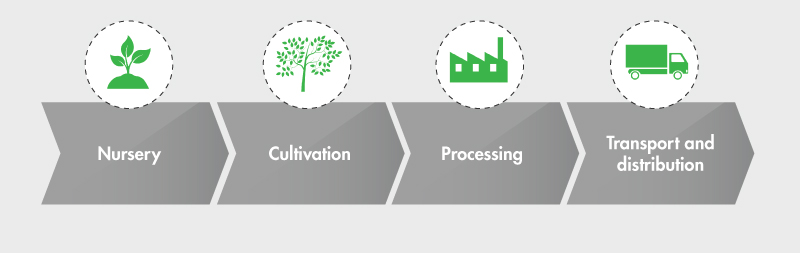
Emissions reporting follows the Product Life Cycle Assessment methodology established by the Green House Gas (GHG) Protocol. The emissions calculator we use was developed by MEO Carbon Solutions, an environmental consulting company, in collaboration with our industrial partners SOCFIN and Michelin.
Download the full press releaseSIPH has been committed to a ZERO DEFORESTATION and ZERO BURNING policy since 2016 and follows the HCV/HCS (High Conservation Value / High Carbon Stock) methodology.
Nature of emissions
| Subsidiaries | Machined output in tonnes | Emissions in kg CO₂eq per tonne produced |
| SAPH | 308 000 | 367 |
| GREL | 54 970 | 364 |
| RENL | 5 015 | 360 |
| CRC | 31 054 | 558 |
| Total SIPH | 399 039 | 368 |
Based on the available industry benchmarks, the SIPH Group’s carbon footprint is among the lowest in the natural rubber sector. This performance is largely due to measures to reduce consumption of energy, fertilisers and pesticides, ongoing energy conversion projects, and the low emission factor of electricity in several of the Group’s countries of operation, notably in Côte d’Ivoire.
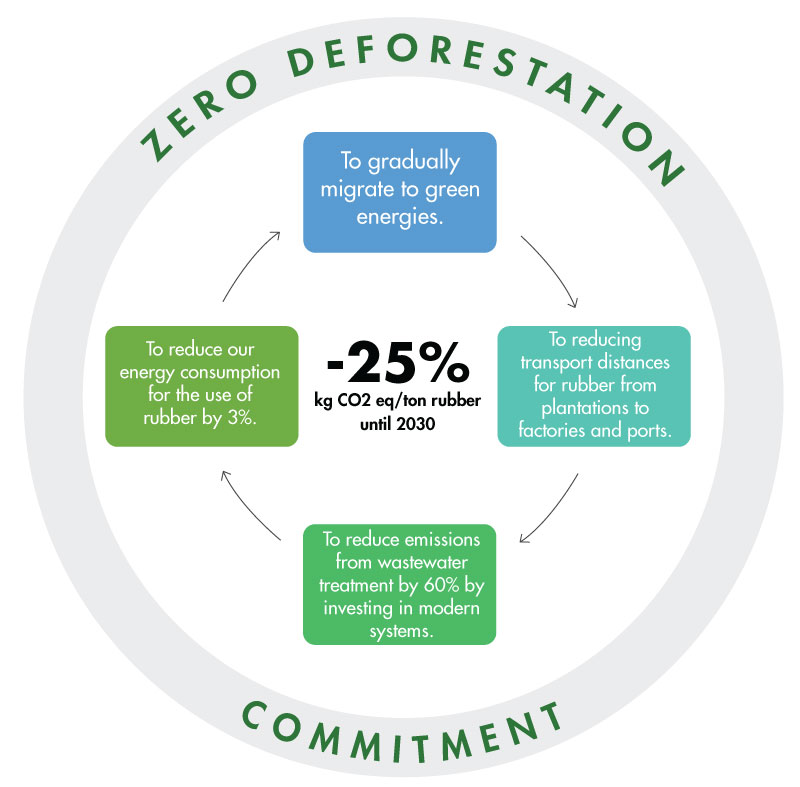
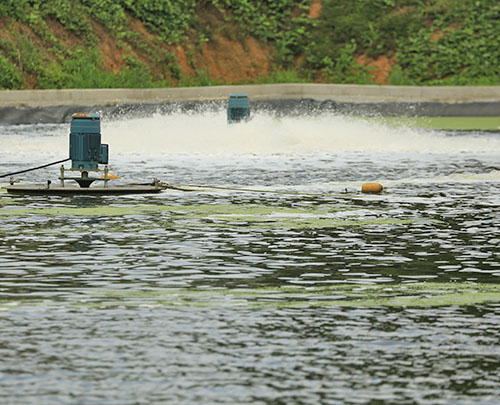
The Natural Rubber division’s decarbonisation strategy is based on a combination of measures aimed at reducing direct emissions linked to its industrial and agricultural activities. It includes a target to reduce pesticide use on plantations by 70 per cent, measures to continuously improve the energy efficiency of factories, and the exploration of a solution to produce biogas from effluent treatment ponds. This project, which is scheduled to come on stream by 2028, will ultimately enable LPG to be replaced by renewable energy. These measures support the division’s ambition to reduce its greenhouse gas emissions by 20 per cent by 2030, compared with the 2023 baseline year.
In order to reduce indirect emissions linked to the purchase of electricity, we are continuing our transition towards an energy mix that increases the share of renewable energy. This approach is underpinned by the gradual roll-out of solar farms at several of our sites, including an initial installation already operational in Bongo, which covers up to 15 per cent of the plant’s energy requirements. This programme will be gradually extended to other industrial units in order to increase the share of renewable energy in our operations. Furthermore, we consistently request a Guarantee of Origin (GO) from our suppliers to certify that a proportion of the electricity purchased from the grid has been generated from renewable energy sources.
The strategy for reducing Scope 3 emissions is based on optimising the upstream and downstream value chain. With this in mind, a working group has been set up to review the methods used to transport rubber and to prioritise lower-carbon logistics solutions. The work focuses in particular on the flows between plantations and factories, as well as between factories and ports of shipment, with the aim of gradually reducing transport-related emissions throughout the value chain.
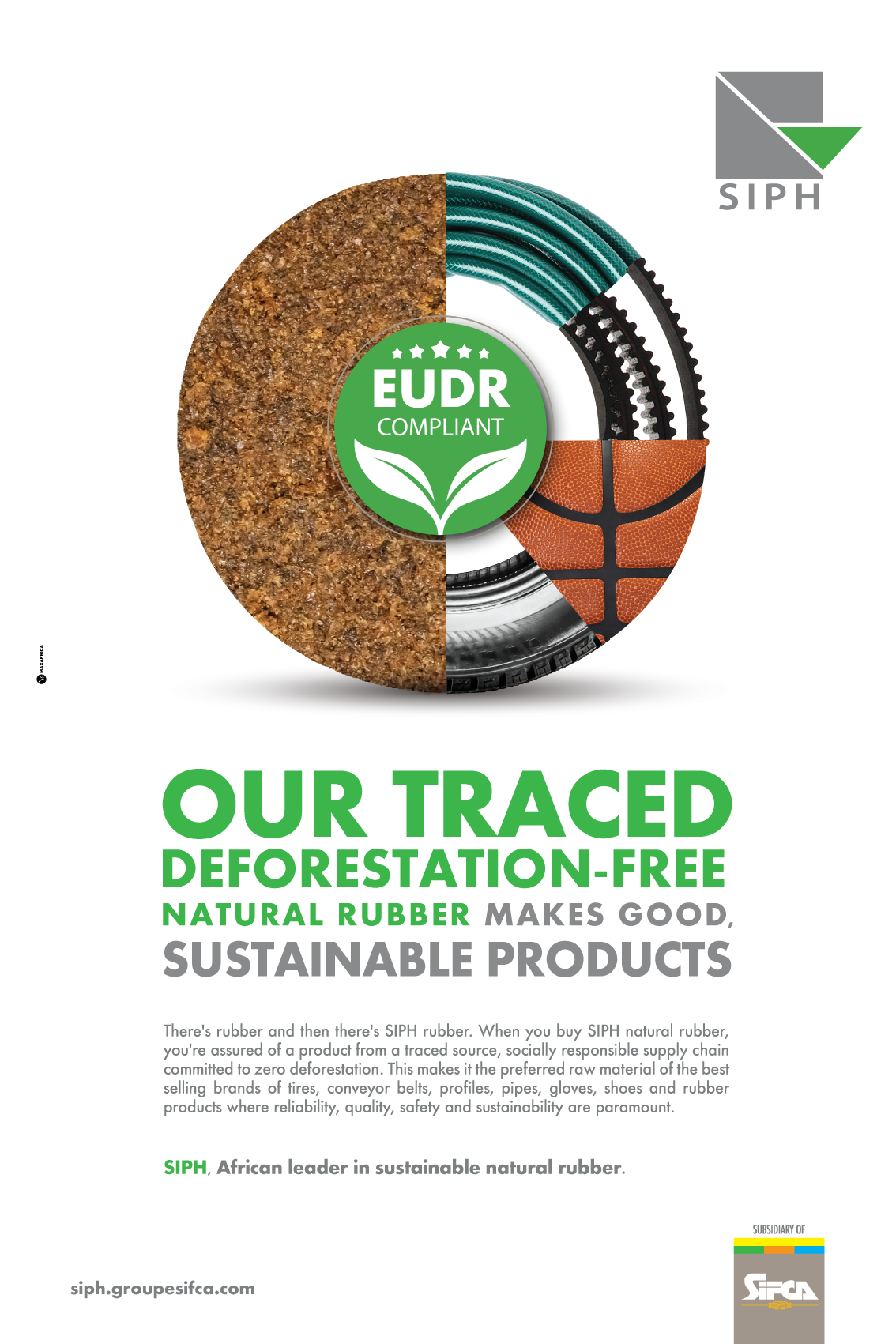
The European Union Deforestation-free Regulation (EUDR) is a significant policy initiative by the European Union to curb deforestation globally. This regulation aims to ensure that products entering the EU market do not contribute to deforestation and forest degradation. EUDR plays a critical role in promoting the consumption of deforestation-free products. This means that the products must be composed of, fed with, or manufactured using commodities produced on lands that have not been cleared of forests for agricultural purposes. By doing so, the regulation seeks to minimize the EU's impact on global forest resources, reduce greenhouse gas emissions caused by deforestation, and support the ongoing battle against biodiversity loss across the planet.
The importance of EUDR can be summarized as follows:
Global Impact: It extends beyond the EU, aiming to reduce deforestation caused by forestry and agricultural activities worldwide.
Environmental Protection: Forms part of a comprehensive EU strategy to safeguard global forests, dovetailing with other regulations like the EU Timber Regulation and the Forest Law Enforcement, Governance, and Trade (FLEGT) Regulation.
Climate Change Mitigation: By ensuring that products are deforestation-free, the EUDR contributes significantly to reducing greenhouse gas emissions, which is vital in the fight against climate change.
Biodiversity Conservation: It helps to preserve biodiversity by preventing the loss of forest habitats, which are crucial for the survival of many species. By implementing EUDR, SIPH is taking a firm stand against deforestation, sending a strong message about the importance of environmental stewardship and sustainable development. This regulation benefits the environment and sets a standard for responsible trade and consumption practices globally.
Human rights: Deforestation is often linked with exploitative labor practices, including forced labor and child labor. The EU regulation can help improve labor standards in forestry and agriculture by promoting sustainable and ethical practices in these industries.
EUDR compliance

At SIPH, we recognize the urgent need to protect our planet's forests and the diverse life they support. Our dedication to environmental stewardship is at the forefront of our operations. In alignment with the European Union's Deforestation-free Regulation (EUDR), we have instituted a robust system that meticulously tracks the journey of our rubber from plantation to product.
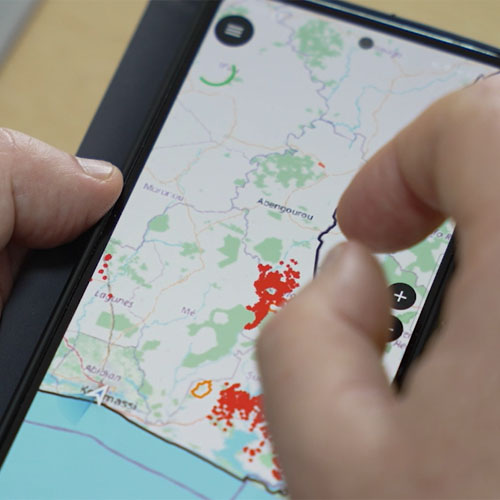
Our traceability system is designed with precision and transparency, ensuring that every batch of rubber we produce can be traced back to its source. All our farmers' plantations are geolocalised and visible as polygons in our system. This allows us to verify that the rubber is sourced from plantations managed responsibly and sustainably without contributing to deforestation or degradation of forest ecosystems.
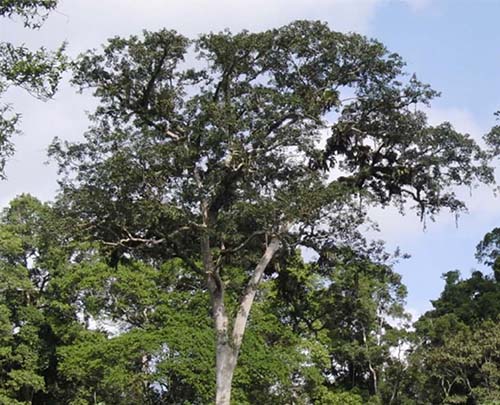
By implementing this system, we comply with the EUDR's rigorous standards and take a proactive role in the global fight against deforestation. We aim to demonstrate that commercial success can go hand-in-hand with ecological responsibility. We are committed to reducing our environmental footprint and supporting the maintenance of our world's precious forests for future generations. At SIPH, we are actively protecting our forest and our biodiversity via numerous actions.
Compliance with the EUDR is a core principle of business strategy. Our responsibility is to ensure that our products do not contribute to the loss of forests, which are vital for carbon sequestration, biodiversity, and the overall health of our global environment. Join us in our journey towards a greener future, where sustainability and industry lead the way to a healthier, more responsible world.
Economic importance,
Social importance,
Environmental importance: cultivation is environmentally friendly
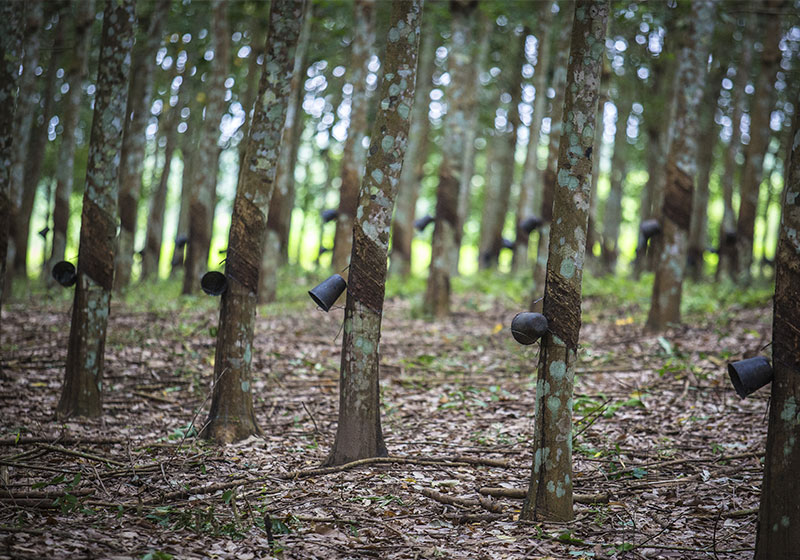

SIPH constantly maintains its efforts in environmental and natural resources preservation. Early 2016, the Company set itself a certain number of goals and rules relative to activities to preserve the environment and natural resources in accordance with the standards of good practice in plantation management. This commitment is enshrined in the updated sustainability policy, formalized by management in November 2017, which must be respected by its employees as well as by other relevant stakeholders working for the company.
The Sustainable Development Manager of SIPH is responsible for coordinating sustainability activities and relies on subsidiary SD managers and management in general, which carries and sets out the commitments made. The purpous is to create synergies capable of understanding and implementing broad principles of sustainability, such as social, economic, environmental… which encompass all aspects of the company's activities. The development of the team, as well as the awareness of all stakeholders in the company, continues to be carried out, in quality and quantity, in a planned manner through the individual development plan and planning. The sustainability team is continuously improving all aspects to ensure the sustainability of the business.